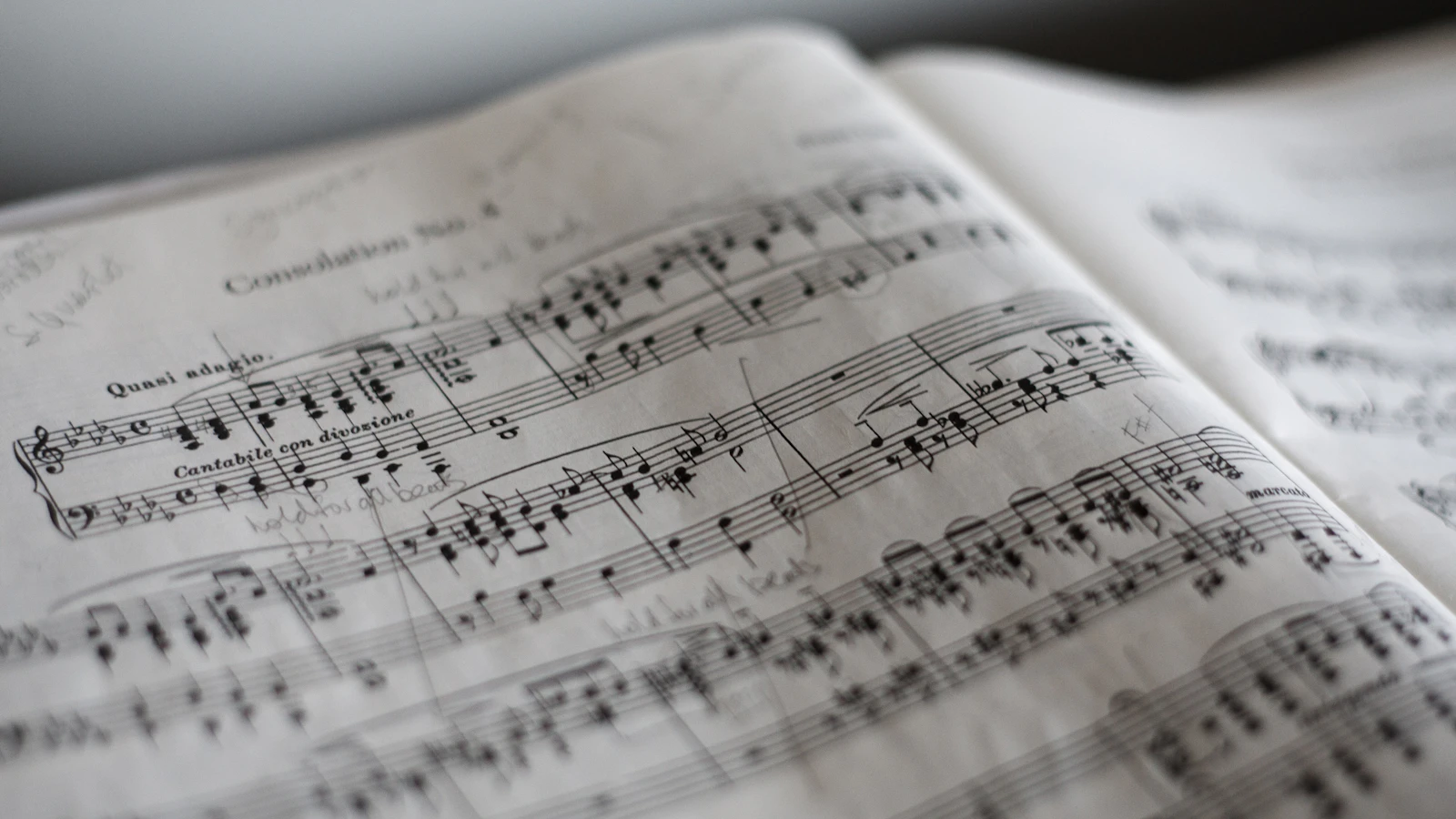
Most musicians spend their early years entirely in 4/4 time — and honestly, why not? It's intuitive, it's everywhere, and it just grooves naturally. But the moment you step outside "four-on-the-floor" and into odd time signatures, something shifts. Radiohead, Dave Brubeck, Meshuggah, Indian classical music — suddenly you're hearing all of it differently.
This is a guide to understanding, counting, and actually feeling odd time signatures, not just intellectually knowing about them.
What Are "Odd" Time Signatures?
A time signature is a fraction at the start of sheet music. The top number tells you how many beats are in each measure. The bottom number tells you what note value counts as one beat (4 = quarter note, 8 = eighth note).
Common time signatures: 4/4, 3/4, 2/4, 6/8 — these divide evenly into groups of 2 or 3.
Odd (or complex) time signatures: 5/4, 7/8, 3/8, 9/8, 11/8 — these can't be divided into perfectly equal groups. Instead, they are built from asymmetric combinations of 2s and 3s.
That asymmetry is exactly what gives them their distinctive, slightly off-balance energy — and their beauty. Once you start hearing it, you can't un-hear it.
5/4 Time: Five Beats Per Bar
How to count it
Five quarter-note beats per measure. Simple to count out loud:
1 – 2 – 3 – 4 – 5 | 1 – 2 – 3 – 4 – 5
The grouping trick
5/4 is almost always felt as a combination of 3+2 or 2+3:
| Grouping | Feel | Example | |---|---|---| | 3+2 | Long-short | Dave Brubeck's Take Five | | 2+3 | Short-long | Pink Floyd's Money (actually 7/4), many jazz pieces |
Try clapping: STRONG weak weak · STRONG weak (3+2) or STRONG weak · STRONG weak weak (2+3).
Famous songs in 5/4
- "Take Five" — Dave Brubeck Quartet (the most iconic 5/4 ever)
- "Living in the Past" — Jethro Tull
- Mission: Impossible Theme — Lalo Schifrin
- "Schism" — Tool (alternates 5/4 and 4/4)
Practice exercise
Set a metronome to 60 BPM. Count "1-2-3-4-5" aloud. Accent the 1 strongly. Then try accentuating the groupings: "1-2-3-4-5" (3+2) or "1-2-3-4-5" (2+3). Walk around the room — you'll feel the limp in your step that makes 5/4 so captivating.
7/8 Time: Seven Eighth-Note Beats Per Bar
How to count it
Seven eighth-note beats per measure. This is where it gets interesting:
1 – 2 – 3 – 4 – 5 – 6 – 7 | 1 – 2 ...
The three standard groupings
7/8 is universally felt as one of three patterns:
| Grouping | Counting pattern | Feel | |---|---|---| | 2+2+3 | 1-2·1-2·1-2-3 | Forward, propulsive | | 3+2+2 | 1-2-3·1-2·1-2 | Builds then releases | | 2+3+2 | 1-2·1-2-3·1-2 | Bouncy, folk-like |
The grouping determines where the stress falls — and completely changes the character of the music.
Syllable counting method
Replace numbers with syllables that match the grouping length:
- "ONE and · TWO and · THREE and-a" (2+2+3)
- Or try body parts: "knee · knee · head" tapped on the beat groups
Famous songs in 7/8 and 7/4
- "Money" — Pink Floyd (7/4, but close cousin)
- "Pyramid Song" — Radiohead
- "The Ocean" — Led Zeppelin (7/8 sections)
- Virtually all Bulgarian folk music (horo rhythms)
- "New Millenium Cyanide Christ" — Meshuggah
Practice exercise
Start at 50 BPM (eighth notes). Tap your foot on the downbeats of each group: so for 2+2+3, your foot taps on beats 1, 3, and 5 (three taps per bar). Speak "one-two-three-four-five-six-seven" with strong emphasis on 1, 3, 5.
3/8 Time: Three Eighth-Note Beats Per Bar
How to count it
Three eighth-note beats per measure:
1 – 2 – 3 | 1 – 2 – 3
How 3/8 differs from 3/4
This is a common source of confusion:
| Time | Beat value | Feel | |---|---|---| | 3/4 | Quarter notes | Waltz-like, full and open | | 3/8 | Eighth notes | Lighter, faster, often a "one-beat bar" in performance |
At fast tempos, 3/8 is conducted in one (one swoop per bar), making it feel like a fast single pulse. At moderate tempos it's felt in three lighter, more delicate beats.
When you'll encounter it
- Classical music: Beethoven used it extensively in scherzo movements
- Folk and dance music where the feel needs to be light and quick
- Jazz ballads where time feel is deliberately ambiguous
9/8 Time: Compound Triple Meter
The key insight: it's grouped in 3
9/8 is almost always felt as three groups of three eighth notes: 3+3+3.
1-2-3 · 4-5-6 · 7-8-9 | 1-2-3 · 4-5-6 · 7-8-9
In practice, you hear three dotted quarter-note beats per bar. Think of it as 3/4 with each beat subdivided into triplets.
How it feels
- Swinging, rolling quality
- Similar to 6/8 but with three main beats instead of two
- Very common in Irish/Celtic jigs and compound classical movements
Famous uses
- "The House of the Rising Sun" — The Animals (actually 6/8 but same compound feel)
- "Norwegian Wood" — The Beatles
- Much Celtic and Irish traditional music (slip jigs are in 9/8)
The "Body Method" for Feeling Odd Meters
Academic counting is useful, but musicians ultimately internalize odd meters through physical movement. Here's a sequence to try:
-
Walk the meter: Walk in a circle, taking steps on each beat. For 7/8 (2+2+3), your stride will be two short, two short, then THREE — notice the pause before the downbeat.
-
Breathe it: Inhale for the first group, exhale for the second. Your breathing becomes the meter's natural phrase.
-
Sing it: Hum the beat, tap your chest for the downbeat of each group. This connects the intellectual pattern to your body's rhythm.
-
Play over a loop: The fastest way to internalize any odd meter is to play along with a loop in that meter. Listen to Take Five or a 7/8 drum loop while tapping along — your brain locks onto the pattern faster than counting ever could.
Using a Metronome for Odd Time Signature Practice
A metronome is the single best tool for developing a stable feel in complex meters. Here's how to use it effectively:
Strategy 1: Accent groupings manually
Set the metronome to click on every eighth note and count out your grouping (e.g., 2+2+3 = accent beats 1, 3, 5). The metronome provides the grid; you provide the asymmetric structure.
Strategy 2: Slow down drastically
Most musicians try to play odd meters at a comfortable tempo too quickly. Drop the tempo by 40-50% and count out loud. Accuracy at slow tempo > sloppy playing at full tempo.
Strategy 3: Build from fragments
For 7/8, practice just the final "3" group until it's rock-solid. Then add the first "2" group. Then put them together. Fragment-based practice is far more effective than always playing the full bar.
Strategy 4: Record yourself
Play along with the metronome and record it. Playback makes phase drift immediately obvious in a way that's hard to notice in real-time.
Quick Reference: Common Odd Time Signatures
| Time | Beats per bar | Typical groupings | Famous examples | |---|---|---|---| | 5/4 | 5 quarter notes | 3+2 or 2+3 | Take Five, Mission: Impossible | | 5/8 | 5 eighth notes | 3+2 or 2+3 | Many progressive rock pieces | | 7/4 | 7 quarter notes | 4+3, 3+4, 2+2+3 | Money (Pink Floyd) | | 7/8 | 7 eighth notes | 2+2+3, 3+2+2, 2+3+2 | Bulgarian folk, prog rock | | 3/8 | 3 eighth notes | All 3 | Beethoven scherzos, folk | | 9/8 | 9 eighth notes | 3+3+3 | Celtic jigs | | 11/8 | 11 eighth notes | 3+3+3+2, 3+2+3+3 | Indian classical, Brubeck |
Where to Go Next
Counting and feeling these signatures is one thing. The real work is playing music in them — not just understanding them theoretically.
- Start with something you already know: play along to Take Five or find a 7/8 drum loop and tap along until the pattern locks in
- Write a simple one-bar pattern in 7/8 and loop it — composing in a meter forces you to feel it in a different way than just playing along
- Dig into tabla, Afrobeat, and Balkan folk music — these are cultures where these meters are completely natural, and hearing them in context is one of the fastest ways to internalize them
Odd meters aren't actually "odd" to musicians who grew up with them. With patient practice — and a metronome you trust — they won't feel odd to you either.
Practice with precision. Use the free TempoFix metronome tool to work on any tempo — and check out the full TempoFix app for Tap Tempo, advanced time signatures, and complete practice session tracking.
Discussion
Comments coming soon
We're setting up our comments system. Check back shortly!